

Quick answer
Wear thermal base layers, a fleece mid-layer, a waterproof windproof outer shell, insulated gloves, a wool beanie or balaclava, and waterproof boots with non-slip soles. Temperatures on the Strait of Magellan range from 2°C to 8°C year-round, with wind chill often pushing the effective temperature below freezing. Tours last four to six hours and operate in exposed marine conditions where spray, wind, and sudden weather shifts are standard.
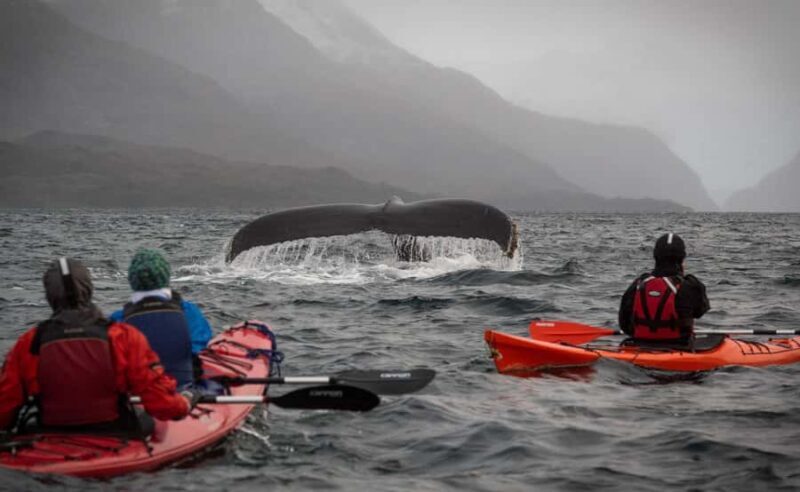
The Strait of Magellan generates its own weather systems. Air temperature at the José Nogueira dock may read 8°C at departure, but once the boat clears the headland and enters the strait, wind speed climbs from ten to forty knots and the effective temperature drops to near freezing. Spray from the bow coats exposed surfaces in salt water, and passengers who dress for the dock rather than the open water spend the voyage below deck, missing the sightings they traveled to see. What to wear on a whale watching tour starts with a three-layer system. The base layer wicks moisture and regulates core temperature—synthetic or merino wool fabrics outperform cotton, which retains water and accelerates heat loss. The mid-layer traps warmth; fleece or down insulation works in dry conditions, but synthetic fill performs better if the outer shell fails. The shell layer blocks wind and water; it must be fully waterproof, not water-resistant, and should include a hood that cinches tight enough to stay in place at speed. Tours operate in conditions where a single compromised layer means the difference between comfort and cold injury. Extremities lose heat fastest. Insulated gloves—waterproof if possible—allow you to grip the rail and operate a camera without exposing bare skin. A wool or synthetic beanie covers the ears; a neck gaiter or balaclava shields the face when wind chill drops below zero. Sunglasses with a retention strap protect against glare off the water, and polarized lenses cut surface reflection, improving visibility when whales surface close to the boat. Waterproof boots with deep tread prevent slips on wet decking, which becomes treacherous once spray accumulates. Tours depart between 04:00 and 05:00, when light is low and temperatures are coldest. The marine park lies two hours offshore, and sightings cluster in areas where wind funnels between islands, amplifying exposure. Humpback whales, orcas, and southern right whales feed in the same channels where weather shifts fastest, so the best viewing windows coincide with the harshest conditions. Passengers prepared for cold-weather marine environments see more wildlife, stay on deck longer, and return without regret.
“Air temperature at the dock may read 8°C, but once the boat enters the strait, wind chill pushes the effective temperature below freezing.”
What to Wear on a Whale Watching Tour: Recommended Gear
Prepare for sub-Antarctic maritime conditions with clothing that handles wind, spray, and rapid temperature changes.
-
Book your tour in advance — Operators depart early (04:00–05:00) and spots fill quickly during peak season.
-
Wear insulated, waterproof outer layers — Wind chill on open water drops the effective temperature significantly below land readings.
-
Bring thermal base layers and fleece mid-layers — The layering system lets you adjust to shifting conditions without overheating.
-
Pack a waterproof jacket and pants — Sea spray and occasional rain are common; cotton offers no protection once wet.
-
Wear closed-toe, non-slip footwear — Boat decks become slippery, and open shoes expose feet to cold water and wind.
-
Bring a warm hat and gloves — Extremities lose heat rapidly in exposed marine environments.
-
Carry sunglasses and high-SPF sunscreen — UV reflection off the water intensifies exposure even on overcast days.
-
Confirm departure time when booking — Tours leave during the 04:00–05:00 window to maximize time in the marine park.
Conduct Rules for What to Wear on a Whale Watching Tour
What you wear on the boat affects safety, visibility through binoculars, and the experience of other passengers. Dark, matte clothing prevents reflections on observation deck windows and reduces visual disruption during whale sightings.
Do
- Wear dark or muted tones that won't create glare on glass
- Choose non-slip footwear with closed toes for moving decks
- Secure all accessories so they can't fall overboard
- Layer clothing that can be adjusted as conditions change
- Bring a hood or hat that fastens under the chin
- Tuck in loose straps and remove dangling jewelry before boarding
Don't
- Don't wear white, neon, or reflective materials that bounce light
- Don't bring open-toed shoes or smooth-soled footwear onto the vessel
- Don't wear large brimmed hats that obstruct views or blow off
- Don't leave phone straps, scarves, or lanyards unsecured
- Don't apply heavily scented products that carry in the wind
- Don't wear oversized sunglasses that slip when you lean over railings
How Weather Influences What to Wear on a Whale Watching Tour
The whale watching season in Punta Arenas primarily spans from December to April, when humpback whales frequent the Strait of Magellan. To maximize sightings, tours operate within the 04:00–05:00 arrival window to reach the marine park early.
December–February
High10°C to 15°C; windy conditions.
Warmer air temperatures, though wind chill remains constant on the water.
March–April
Moderate5°C to 12°C; frequent rain.
Cooler transition months requiring heavier thermal base layers.
Early Morning (04:00–05:00)
Peak—
The essential arrival window to ensure optimal travel time and whale activity observation.
Verdict: The best time to visit is during the peak season months of January and February, arriving consistently between 04:00 and 05:00.
Logistics and What to Wear on a Whale Watching Tour
The departure point for whale watching tours is located at José Nogueira 1255 in Punta Arenas. Most visitors reach this central harbor area via taxi or private vehicle, as early morning public transport options are limited.
Direct transfer to José Nogueira 1255
Follow Avenida Costanera del Estrecho to central pier
Walk toward the coastal sector near the main plaza
Check availability
Frequently asked questions about what to wear on a whale watching tour
Everything you need to know about what to wear on a whale watching tour